Free Shipping on pigment orders over $89 (Domestic). NO FREE SHIPPING ON MOLDS
We ship pigments worldwide! Overnight is not available on weekends. Place Next Day Shipments before 3pm Est!




-
Pigments & More
-
Pigments by Color
-
Specialty Pigments
-
Flakes - Glitters
-
Accessories
-
Apparel / Mugs
-
Gift Cards
Pigment Pastes-
Pigment Pastes by Color
-
Pigment Pastes Sets
Eye Candy Epoxy ResinPromise Epoxy ResinSample SetsBuild Your Own BundlesSilicone MoldsCatalog / Banner / PosterInformationalAffiliate ProgramSubscriptions -
-
-
Pigments & More
-
Pigments by Color
-
Specialty Pigments
-
Flakes - Glitters
-
Accessories
-
Apparel / Mugs
-
Gift Cards
Pigment Pastes-
Pigment Pastes by Color
-
Pigment Pastes Sets
Eye Candy Epoxy ResinPromise Epoxy ResinSample SetsBuild Your Own BundlesNEWSilicone MoldsCatalog / Banner / PosterInformationalAffiliate ProgramSubscriptions -
Eye Candy Epoxy Sale!! - FREE SHIPPING
Eye Candy Pigments
Eye Candy Deep Pour Epoxy
(0)
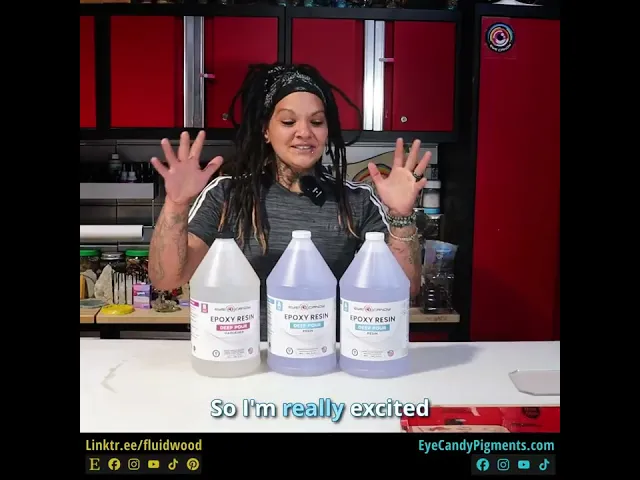
Eye Candy Deep Pour Epoxy
(0)
In stock - Ready to be shipped
Estimated delivery between July 24 and July 26. Order within .
Pay with
Your transaction is protected with advanced security measures to keep your information confidential

Quick Resin Calculator
Estimate the epoxy needed before you pour.
Estimate only. Always double check your product directions, surface type, and pour depth before mixing.
Designed for thick castings and large-scale projects, Eye Candy Deep Pour Epoxy delivers exceptional clarity, low heat buildup, and reliable curing for deep applications.
Whether you're creating river tables, embedding objects, or pouring large molds, this system is engineered to handle mass pours without cracking, excessive heat, or distortion.
With a slow curing profile and ultra-low viscosity, this epoxy allows bubbles to rise and escape naturally—resulting in clean, crystal-clear finishes even in deep pours.
Designed for Thick Pours
Formulated for deep applications, allowing for significantly thicker pours compared to standard epoxy systems.
Ultra-Low Viscosity
Thin, water-like consistency helps bubbles release naturally and improves flow into tight spaces and molds.
Extended Working Time
Longer open time allows for complex pours, detailed designs, and large volume applications without rushing.
Reduced Heat Buildup
Engineered to minimize exotherm, reducing the risk of cracking, warping, or yellowing in large pours.
Crystal Clear Finish
Cures to a clear, glass-like finish that enhances wood grain, embedded objects, and pigments.
Stable, Controlled Cure
Slower curing process ensures a more consistent and predictable result across large volumes.
1. Measure resin and hardener at a 2:1 ratio by volume
2. Mix thoroughly for 3–5 minutes, scraping sides and bottom
3. Pour slowly into your mold or project area
4. Allow bubbles to rise naturally (minimal heat needed)
5. Maintain proper temperature during curing
6. Allow full cure before machining or sanding
Cure Time: 24–72+ hours depending on volume and conditions
Ideal Temperature: 65–75°F
For large pours (2+ gallons), stay closer to 65°F
• Always pour within recommended depth per layer
• Lower temperatures help control heat in large pours
• Avoid pouring too thick in a single pass unless tested
• Seal wood before pouring to reduce air release
• Mix slowly to avoid introducing bubbles
• Do not rush curing—this system is designed to cure slowly
Deep pour epoxy performance depends heavily on temperature, volume, and pour depth control
Eye Candy Deep Pour Epoxy is fully compatible with:
• Mica powders
• Pigment pastes
• Liquid dyes
• Metallic and swirl pigments
Ideal For:
• River table color work
• Suspended pigments
• Layered effects
• Transparent or tinted pours
Because of the slower cure, pigments have more time to move, flow, and create natural effects
• Mix Ratio: 2:1 (by volume)
• Viscosity: Low (~450 cP mixed)
• Working Time: Extended (varies by temp and volume)
• Cure Time: 24–72+ hours
• Shrinkage: ~3%
• Recommended Temp: 65–75°F
• Hardness (Full Cure): Shore D80
• Application: Deep pours / thick castings
General Questions
What is the mix ratio?
Eye Candy Deep Pour uses a 2:1 ratio (resin to hardener by volume).
How thick can I pour at once?
This depends on temperature and volume. Always follow recommended pour depths and test for larger applications.
Why is this epoxy slower than table top epoxy?
Deep pour epoxy is designed to cure slowly to reduce heat buildup and prevent cracking in large pours.
How long does it take to cure?
Initial cure can take 24–72 hours, with full cure depending on thickness and conditions.
Application & Performance
Why did my epoxy crack or overheat?
This is typically caused by:
• Pouring too thick
• High temperatures
• Large volumes curing too quickly
Why are there bubbles in my pour?
Deep pour epoxy naturally releases bubbles, but they can come from:
• Air trapped in wood
• Fast mixing
• Pouring too quickly
Do I need to use heat to remove bubbles?
Minimal heat is recommended. This system is designed to allow bubbles to escape naturally.
Why is my epoxy still soft or flexible?
This may be due to:
• Low temperatures
• Incomplete mixing
• Insufficient cure time
Pigments & Effects
Can I use pigments in deep pour epoxy?
Yes—this system works extremely well with pigments and allows for dynamic movement and effects.
Will pigments settle in deep pours?
Heavier pigments may settle slightly due to the extended cure time. Adjust technique depending on desired effect.
Project Use
What projects is this best for?
• River tables
• Large castings
• Mold pours
• Embedding objects
Can I use this as a top coat?
It is not recommended. Use Table Top Epoxy for surface coatings and finishes.
Safety & Storage
What temperature should I pour at?
65–75°F, with lower temps preferred for large pours.
How should I store it?
Keep sealed in a cool, dry place.
Do I need PPE?
Yes—gloves and proper ventilation are always recommended.
• Safety Data Sheet (SDS) available upon request
• Use in a well-ventilated area
• Wear gloves and protective gear
• Avoid skin and eye contact
• Follow all safety instructions before use
Problem: Epoxy Cracked or Overheated
What Happened:
Deep pour epoxy generates heat during curing. If too much heat builds up, it can cause:
• Cracking
• Warping
• Yellowing
• Flash curing
Common Causes:
• Pouring too thick in one layer
• High room temperatures
• Large volume pours without temp control
• Poor airflow
How to Fix / Prevent:
• Pour in thinner layers if needed
• Keep working temperature closer to 65°F for large pours
• Avoid direct sunlight or hot environments
• Allow proper cooling between layers
Problem: Epoxy Stayed Soft or Didn’t Cure
What Happened:
The chemical reaction didn’t complete properly.
Common Causes:
• Incorrect mix ratio (not 2:1)
• Incomplete mixing
• Low temperatures
• Insufficient cure time
How to Fix / Prevent:
• Always measure accurately (2:1 by volume)
• Mix thoroughly for 3–5 minutes
• Work in recommended temp range (65–75°F)
• Allow full cure time—deep pours take longer
If epoxy is still soft after 72+ hours, it usually cannot be fixed and must be removed.
Problem: Excessive Bubbles in Deep Pour
What Happened:
Air became trapped in the epoxy and didn’t fully release.
Common Causes:
• Air trapped in wood or substrate
• Mixing too aggressively
• Pouring too quickly
• No seal coat
How to Fix / Prevent:
• Apply a seal coat before deep pours
• Mix slowly to avoid whipping air
• Pour gradually, not all at once
• Allow bubbles to rise naturally (deep pour is designed for this)
Minimal heat can be used, but avoid overheating.
Problem: Cloudy or Hazy Epoxy
What Happened:
Moisture or improper conditions affected clarity.
Common Causes:
• High humidity
• Moisture in wood
• Low temperatures
• Improper mixing
How to Fix / Prevent:
• Ensure materials are dry before pouring
• Work in controlled environment
• Maintain proper temperature
• Mix thoroughly
Problem: Yellowing or Discoloration
What Happened:
Heat or UV exposure affected the epoxy.
Common Causes:
• Excessive exotherm (too much heat)
• Pouring too thick
• Direct UV exposure over time
How to Fix / Prevent:
• Control pour depth
• Maintain proper temperature
• Avoid prolonged UV exposure when possible
Problem: Pigment Settling or Uneven Color
What Happened:
Pigments moved or settled during the extended cure time.
Common Causes:
• Heavy pigments in slow-curing system
• Deep pours without layering
• Excess pigment weight
How to Fix / Prevent:
• Use lighter pigment loads for deep pours
• Pour in layers if needed
• Mix thoroughly before pouring
Deep pour epoxy allows for natural movement, which can be used creatively.
Problem: Surface Imperfections (Fish Eyes, Separation)
What Happened:
Epoxy failed to properly bond to the surface.
Common Causes:
• Oil-based paints or stains
• Contaminated surface (oil, dust, silicone)
• Improper prep
How to Fix / Prevent:
• Avoid oil-based coatings
• Clean surface thoroughly
• Sand and prep properly before pouring
Problem: Shrinkage or Pulling Away from Edges
What Happened:
Epoxy contracted slightly during cure.
Common Causes:
• Natural shrinkage (~3%)
• Poor surface prep
• Large volume curing unevenly
How to Fix / Prevent:
• Account for shrinkage in deep pours
• Ensure proper surface prep
• Apply additional layer if needed
Problem: Uneven Cure or Soft Spots
What Happened:
Epoxy cured inconsistently across the pour.
Common Causes:
• Poor mixing
• Uneven temperatures
• Large volume inconsistencies
How to Fix / Prevent:
• Mix thoroughly and evenly
• Maintain consistent temperature
• Avoid rushing large pours
Recently viewed products
Featured Products


Need help?