Free Shipping on pigment orders over $89 (Domestic). NO FREE SHIPPING ON MOLDS
We ship pigments worldwide! Overnight is not available on weekends. Place Next Day Shipments before 3pm Est!



-
-
Pigments by Color
-
Specialty Pigments
-
Flakes - Glitters
-
Accessories
-
Apparel / Mugs
-
Gift Cards
-
Pigment Pastes by Color
-
Pigment Pastes Sets
-
-
-
Pigments & More
-
Pigments by Color
-
Specialty Pigments
-
Flakes - Glitters
-
Accessories
-
Apparel / Mugs
-
Gift Cards
Pigment Pastes-
Pigment Pastes by Color
-
Pigment Pastes Sets
Eye Candy Epoxy ResinPromise Epoxy ResinSample SetsBuild Your Own BundlesNEWSilicone MoldsCatalog / Banner / PosterInformationalAffiliate ProgramSubscriptions -
Check out our new arrivals!
FREE SHIPPING ON ALL EPOXY!
Eye Candy Pigments
Proton Purple
(12)
$15.99
ALWAYS TEST BEFORE FULL APPLICATION
DESCRIPTION
Proton Purple is a beautiful bright purple pigment and part of our Neon Series line. Our popular mica powder is ideal for DIY craft use, such as, epoxy, resin, woodworking, pen blanks, plastics, slime, watercolors, cosmetics, fishing lures, bath bombs, jewelry, melt and pour, acrylic, polish, candle making, and MUCH more.
INGREDIENTS & PARTICLE SIZE
Particle size 1-5 μm
Ingredients Polyurethane-11, Manganese Violet
Heat Threshold 500 °F
MIXING TIPS FOR NEONS
Are you having a difficult time mixing the pigments or just find yourself stirring and stirring? Or even worse, finding tiny specs in your finished product? This is mostly the cause of not mixing and breaking down the pigment enough.
Due to the granular nature of specialty pigments such as neons, glow in the dark, etc. these pigments are typically a little more difficult mix and breakdown.
If this is the case, place the pigments in a small cup, use denatured alcohol and wet the pigments, stir until it has a consistency of a paste. Stir until they break down.
We also have a very short video showing the process HERE
ADDITIONAL DATA
| Product Type | Mica |
| Vegan | Yes |
| Soaps | Yes |
| Epoxy Resin | Yes |
| Acrylic | No |
| FDA-Permitted for External Use | No |
| FDA-Permitted for Eye Area Use | No |
| FDA-Permitted for General (Including Lips) Use | No |
| FDA-Permitted for Bath Bombs Use | No |
We are always asked if our pigments can be used for cosmetic purposes. Below you will find some additional information on FDA Regulations.
FDA: Fact Sheet: Color Additives and Cosmetics
FDA: Color Additives Permitted for Use In Cosmetics
EPOXY RATIOS
| Epoxy | 2 grams per 8 ounces |
The most common question that we receive is "How much pigment per gallon of epoxy?". This is a very valid question and unfortunately there is no set answer due to the numerous types of applications and variations. This is why we recommend the 2 grams per 8 oz and add as desired.
For example:
- Are you looking for an opaque or transparent look?
- Lighter colors may take more pigment to achieve the color.
Why micron sizes matter:
- PLEASE be aware of the micron sizes of the pigment. The larger the micron, the larger the particle.
- Typical pigments average 10-60um.
- Be aware that larger micron sized pigments will most likely have a heavier density which will cause the pigment to sink faster in fresh epoxy such as deep pours.
- For example, our Icicle or 14k Nugget Gold is 200-700um and will most likely sink in fresh epoxy faster.
- To alleviate sinking either let the epoxy settle up a little bit. Or, come back through your project to "stir" it a little more.
SOAPS RATIOS
| Soap - Cold process | 2 tsp per lb of oils |
| Soap - Hot process | ½ tsp lb of MP base |
NOTE: Due to the white MP base, it will always create a pastel color.
AUTOMOTIVE / REMOVABLE PAINT RATIOS
DO NOT use for these applications. Neon pigments are not UV resistant and will fade over time under constant UV (sun) exposure.
ACRYLIC POURING RATIOS
INDUSTRIAL, PLASTICS, & GLASS COATINGS RATIOS
| Vinyl Wrap And Plastic Films | 5-10% By Weight |
| Plastic Bottles | 1-2% By Weight |
| Masterbatch | 10-30% By Weight |
| Plastic Resins | 0.2-0.5% By Weight |
| Rubber Polymers And Latex | 5-15% By Weight |
| Glass | 1-10% By Weight |
| Candles | 5-10% By Weight |
GRAPHIC INKS & SCREEN PRINTING RATIOS
| Flexographic Inks (Packing Materials) | 15-25% By Weight |
| Offset Printing Ink | 5-10% By Weight |
| Screen Printing And Screen Inks | 10-30% By Weight |
| Textile Printing And Textile Inks And Pastes | 5-10% By Weight |
| Gravure Inks | 5-15% By Weight |
COSMETICS RATIOS
| Nail Polish | 5-25% By Weight |
FIREARMS (CERAKOTE) RATIOS
 Photo Courtesy: crawlinzx14 / Picture shows Eye Candy Colorshift over a black base.
Our pigments can be used for both Cerakote and KG Gunkote clears. Below is just some references.
- 5 grams of pigment per 4oz
- Typically recommend a black base. For light colored pigments such as yellows, pinks, etc. you may want to try a light colored base. ALWAYS test before full application.
- 3 coats for full saturation. Some colors may require less.
- Stay with pigments with a 10-60um micron size. All particle sizes are listed on our product pages or you can find it on our Pigment Information List HERE.
- Recommend using a .80 spray nozzle. Some use 1.0 for clears.
REQUEST SAFETY DATA SHEET (SDS)
To request a safety data sheet, please contact us here: Jeff@eyecandycustomz.com
Proton Purple
(12)
$15.99
In stock - Ready to be shipped
Estimated delivery between October 15 and October 17. Order within .
Pay with
Your transaction is protected with advanced security measures to keep your information confidential

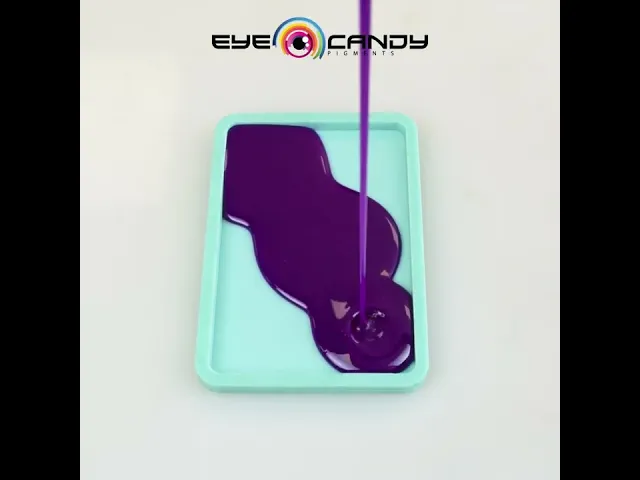
Proton Purple is a beautiful bright purple pigment and part of our Neon Series line. Our popular mica powder is ideal for DIY craft use, such as, epoxy, resin, woodworking, pen blanks, plastics, slime, watercolors, cosmetics, fishing lures, bath bombs, jewelry, melt and pour, acrylic, polish, candle making, and MUCH more.
Particle size : 1-5 μm
Ingredients : Polyurethane-11, Manganese Violet
Heat Threshold : 500 °F
Product Type : Mica
Vegan : Yes
Soaps : Yes
Epoxy Resin : Yes
Acrylic : No
FDA-Permitted for External Use : No
FDA-Permitted for Eye Area Use : No
FDA-Permitted for General (Including Lips) Use : No
FDA-Permitted for Bath Bombs Use : No
NOTE: External use applies to facial make up and nail polish. Bath Bombs fall under the Lips category.
Are you having a difficult time mixing the pigments or just find yourself stirring and stirring? Or even worse, finding tiny specs in your finished product? This is mostly the cause of not mixing and breaking down the pigment enough.
Due to the granular nature of specialty pigments such as neons, glow in the dark, etc. these pigments are typically a little more difficult mix and breakdown.
If this is the case, place the pigments in a small cup, use denatured alcohol and wet the pigments, stir until it has a consistency of a paste. Stir until they break down.
Epoxy : 2 grams per 8 ounces
The most common question that we receive is “How much pigment per gallon of epoxy?” This is a very valid question and unfortunately there is no set answer due to the numerous types of applications and variations. This is why we recommend 2 grams per 8 oz and add as desired.
For example: Are you looking for an opaque or transparent look? Lighter colors may take more pigment to achieve the color.
Why micron sizes matter:
PLEASE be aware of the micron sizes of the pigment. The larger the micron, the larger the particle.
Typical pigments average 10-60um.
Be aware that larger micron sized pigments will most likely have a heavier density which will cause the pigment to sink faster in fresh epoxy such as deep pours. For example, our Icicle or 14k Nugget Gold is 200-700um and will most likely sink in fresh epoxy faster. To alleviate sinking either let the epoxy settle up a little bit. Or, come back through your project to “stir” it a little more.
Due to the granular nature of specialty pigments such as neons, glow in the dark, etc. these pigments are typically a little more difficult mix and breakdown.
If this is the case, place the pigments in a small cup, use denatured alcohol and wet the pigments, stir until it has a consistency of a paste. Stir until they break down.
Cold process - 2 tsp per lb of oils
Hot process - ½ tsp lb of MP base
DO NOT USE! Neon pigments are not recommended for automotive use because they have low UV resistance. This means that when exposed to sunlight for extended periods, the pigments may fade or lose their vibrancy over time. UV rays can cause the colors to deteriorate, which is why these pigments are best used in applications that are not subject to prolonged sunlight exposure.
Courtesy from our friend Justin Salley.
For more tutorials, visit his Youtube page www.youtube.com/@justinsalleyart/
STEP #1 - MIX YOUR POURING MEDIUM
3 parts Behr8300 Deep Base Interior/Exterior Hi-Gloss Enamel. 1 part JOSONJA Polyurethane Water Based Gloss Varnish. Mix gently folding paint and varnish together until they are completely mixed, Go Slow to reduce mixing bubbles.
STEP #2 - DISPERSING PIGMENTS INTO YOUR MEDIUM
Pour 1/2 to 1 teaspoon of JOSONJA Gloss Varnish into mixing container. Add around a teaspoon of Pigment (I generally add a little more) into your container with the JOSONJA. Mix until all Pigments have dissolved into a liquid making sure to stir any clumps out at this time.
STEP #3 - COMBINING YOUR POURING MEDIUM & DISPERSED PIGMENTS
Add around 3 Tablespoons of Pouring medium into your Dispersed Pigments. Mix thoroughly, being slow and folding rather than whipping, this will minimize the air bubbles.
STEP #4 - WHAT IF?
◦ If your new mixed color seems to thick - Add a small amount of JOSONJA and stir until you reach the desired consistency.
◦ If your new mixed color seems to thin - Add a small amount of Behr8300 (ONLY) and stir until you reach the desired consistency.
Light/Translucent Colors: 0.25%–1% pigment per total plastisol weight
Standard Mix: 1%–3% pigment per total plastisol weight
Rich, Opaque Colors: Up to 5%, but too much pigment may affect flow & curing
How This Translates to Grams:
Plastisol Amount | 1% Pigment | 2% Pigment | 3% Pigment | 5% Pigment
100g plastisol | 1g pigment | 2g pigment | 3g pigment | 5g pigment
250g plastisol | 2.5g pigment | 5g pigment | 7.5g pigment | 12.5g pigment
500g plastisol | 5g pigment | 10g pigment | 15g pigment | 25g pigment
1kg (1000g) plastisol | 10g pigment | 20g pigment | 30g pigment | 50g pigment
Which Pigment Size Should You Choose?
5g Pigment – Best for small batch testing (up to ~500g plastisol at 1-2%)
25g Pigment – Great for mid-size projects (~500g-2.5kg plastisol)
50g Pigment – Ideal for larger production runs (~1kg-5kg plastisol)
We recommend starting with a lower percentage (1-2%) and gradually adjusting based on the intensity you're looking for. Metallic and interference pigments may require extra mixing for even dispersion.
Recently viewed products
Featured Products


- 5 stars: 11 (92%)
- 4 stars: 1 (8%)
- 3 stars: 0 (0%)
- 2 stars: 0 (0%)
- 1 star: 0 (0%)
I’ve just used my proton purple for the first time and this color is nothing short of luscious. I would describe it more of a berry color actually but it is absolutely a hard candy beautiful color.
Good product for bath bombs, good value
I use this for root touch up & hairline touch up between dyes. It's cosmetic grade. It wipes clean off of skin with dry cloth. Easy clean up on counters. (NO STAIN!) Very little transfer. Major upgrade to my hair dye game!!

I was very impressed with the vibrant colors and the quality of the pigments. I will definitely reorder.
The color is so bright and vivid!
Perfect neon color
This is definitely a beautiful shade of purple and vibrant, but in terms of black light reaction, this wasn’t very bright compared to the other neons.
OMG this is the best
This is such a cool and fun color to play with. I like that it works as a nice flat color with other shimmer colors. They make the purple stand out even more in my opinion. I have used it in small river mousepads and in burl turnings on the lathe. It polishes up to reveal a depth of purple that is just stunning . I use Magic Juice on my turnings and it really deepens the color. After my sample, I had to come buy more. It's a staple in my color arsenal.
Absolutely love it
My favorite purple so far.
Great Pigments !!! Fast Shipping !!! Easy transaction… Great communication!!!
Information
Popular Items
Need help?